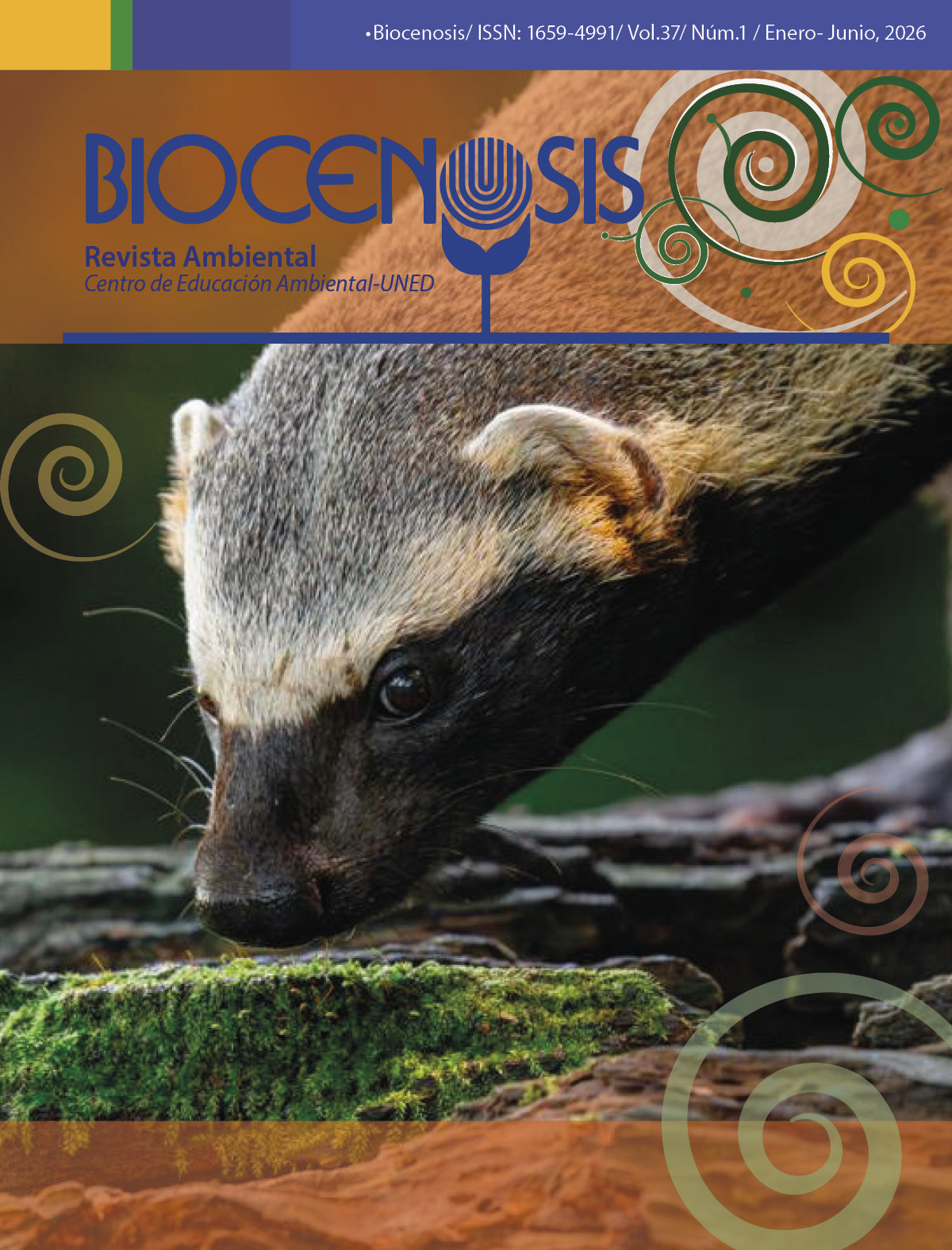
Records and Distribution of Mustelids in the Northern Huetar Region, Costa Rica, Using Camera Trapping, Surveys, and Citizen Science
DOI:
https://doi.org/10.22458/rb.v37i1.6657Keywords:
medium-sized carnivores, neotropical mammals, spatial distribution, participatory monitoring, habitat use, private farmsAbstract
This study assessed the presence and distribution of mustelids in the Huetar Norte Region of Costa Rica using a combined methodological approach that included camera trapping on farms registered in the Fondo de Biodiversidad Sostenible (FBS, Sustainable Biodiversity Fund), surveys to the landowners, and analysis of citizen science records from iNaturalist (2008–2025). Camera traps installed between September and November 2025 confirmed the presence of Eira barbara (tayra) in two private farms. On the other hand, iNaturalist data indicated that Lontra annectens (neotropical river otter) is the most frequently reported species in the region, while Galictis vittata (greater grison) shows a low observation frequency. Local surveys also suggested the possible presence of Neogale frenata (long-tailed weasel), although it was not recorded through camera trapping or on the digital platform. Overall, the results highlight the value of private farms enrolled in the FBS and participatory monitoring as strategies for documenting and conserving mustelids in the Huetar Norte Region, particularly in tropical productive landscapes.
Downloads
Published
Issue
Section
License

This work is licensed under a Creative Commons Attribution-NonCommercial 4.0 International License.